

Why a Property Survey Before a Fence Saves You Trouble
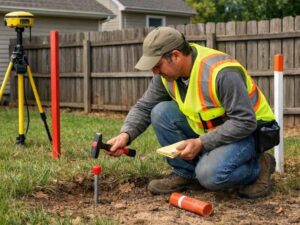 Putting up a fence seems straightforward. You pick a style, hire someone to install it, and that is that. But skipping a property survey before installation is one of the most common and costly mistakes homeowners make.
The problem is almost never obvious at first. The fence goes up, the yard looks great, and life moves on. Then a neighbor sells their house. The new owner gets a survey done. And suddenly there is a fence sitting six inches, or six feet, on the wrong side of the property line.
At that point, the fence usually has to come down.
What Alabama Law Says About Fence Placement
In Alabama, a fence built on a neighbor’s property without their permission is considered an encroachment. The property owner whose land is being encroached upon has the legal right to have it removed.
Alabama also has specific rules about shared fences, called partition fences, that sit directly on a boundary line. Under Alabama Code Section 35-7-1, neighbors can share the cost of a partition fence under certain conditions. But before any of that applies, both parties need to know exactly where the boundary line actually is.
A property survey is the only legally recognized way to establish that line.
Why Guessing the Property Line Is Riskier Than It Sounds
Most homeowners base their fence placement on what looks right. They line it up with an old fence, follow where the grass changes, or go by where they think the corner pin is. These methods feel reasonable but they are unreliable.
Here is why they fail:
- Old fences are often wrong. A fence installed by a previous owner may have been placed without a survey. Following it just repeats the same mistake.
- Corner pins get moved. Lawn equipment, construction work, and erosion can shift or bury property corner pins over time.
- Lots are rarely perfectly rectangular. Even in subdivisions, lot lines can angle, curve, or jog in ways that are not obvious from the street.
- County tax maps are not precise. They give a rough picture of where lots sit but they are not accurate enough to place a fence.
A difference of a foot or two may not sound like much. But it is enough to trigger a legal dispute, delay a future property sale, or require you to tear out and rebuild a fence you just paid several thousand dollars to install.
What a Property Survey for a Fence Actually Involves
When you hire a licensed land surveyor to prepare for fence installation, they do more than just find your corners. Here is what the process looks like:
Locating and Confirming Your Property Corners
The surveyor visits your property and locates the existing corner pins using GPS equipment and the deed records on file with Tuscaloosa County. If pins are missing or cannot be found, the surveyor calculates their correct position and sets new monuments in the ground.
Marking the Boundary Line
Once the corners are confirmed, the surveyor can mark the line between them at regular intervals using stakes or flags. This gives your fence installer a clear, accurate line to follow from one end of your yard to the other.
Documenting Existing Encroachments
If anything already crosses your boundary, such as a neighbor’s garden bed, shed, or old fence, the surveyor will note it on the plat. This protects you. If a dispute arises later, you have a certified document showing exactly what the conditions were before your fence went in.
Common Situations a Fence Survey Prevents
These are real problems that come up regularly when homeowners skip the survey step.
The fence is built over the line. The homeowner installs a fence, the neighbor gets upset, and after a lot of back and forth, a survey confirms the fence is on the wrong side. The fence has to be removed and reinstalled. The homeowner pays twice.
The fence blocks a utility easement. Many properties have utility easements running along the rear or side of the lot. Building a fence across an easement can result in the fence being removed by the utility company with no compensation to the homeowner.
The sale falls through. When a homeowner tries to sell, the buyer’s survey reveals the fence encroaches on a neighbor’s property. The sale is delayed or cancelled until the fence is moved. This is one of the most avoidable reasons a real estate closing gets held up.
The neighbor builds next. A neighbor installs their own fence based on where your fence is, assuming it is on the line. Now two fences are wrong. Fixing it becomes more complicated and more expensive.
How Much Does a Fence Survey Cost?
The cost of a property survey for fence installation depends on the size of your lot and how many corners need to be located or reset. For a standard residential lot in Tuscaloosa County, most fence surveys fall in the range of $400 to $700.
That is a small amount compared to the cost of tearing out and replacing a fence, paying legal fees, or losing a sale on your home.
What to Tell Your Fence Installer
Once your surveyor has marked the line, share that information clearly with your fence installer. Tell them:
- The stakes or flags mark the legal property boundary
- The fence must stay on your side of the line, not on top of it
- Any gate openings or angled sections should be confirmed with you before they are set
A good installer will follow the marked line without question. If an installer dismisses the survey markers or suggests the line looks off, that is worth paying attention to before work begins.