

Land Surveying Takes on a New Role Once Open Space Starts Filling In
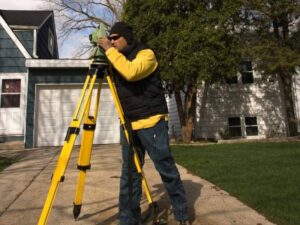
Most owners don’t plan to fill their property. It happens on its own. A patio goes in. Then a shed. Then a garden bed that slowly becomes something bigger. Land surveying becomes a different kind of tool once that process is underway, because at a certain point the question shifts from what to build next to how much room is actually left to build it in.
Empty Space Always Feels Bigger Than It Really Is
Buy a property with open land behind the house and it feels like more than enough room for anything you might want to do later. That feeling is real, and it’s also wrong most of the time.
Open space looks big because there’s nothing in it. No structures, no paths, nothing to give you a sense of scale. Walk the same area after a shed goes up and a concrete pad gets poured, and the remaining space already feels noticeably smaller. The land didn’t shrink. The reference points changed.
This is how most owners experience their property. They start with a sense of open possibility and slowly discover that each project reduces what’s left. Nobody plans it that way. It’s just what happens when a property gets lived in.
One Good Idea Often Invites Another
A covered patio is a good place to sit. It’s also a natural spot for a fire pit. The fire pit leads to better outdoor lighting. The lighting makes the space feel finished, and a finished outdoor area starts to suggest a path to somewhere, maybe a garden, maybe a small structure to store tools and furniture.
This is normal. Improvements tend to generate more ideas rather than fewer. Each addition makes the property more useful, and a more useful property shows more places where another addition would fit. Few properties end up looking anything like their owners imagined when they first moved in, and most of the time that’s a good outcome.
The issue isn’t that this happens. The issue is that it happens without a running count of what’s been used and what remains. Owners make each new decision with an intuitive sense of available space rather than accurate information about it.
The Property Starts Asking for Different Priorities
A family with young children needs different things from a backyard than the same family eight years later. A homeowner who works from home uses outdoor space differently than one who commutes every day. Routines change, and the property tends to change with them.
What felt like plenty of open space for a future garage might now be where the kids play every afternoon. The corner lot that seemed perfect for storage has become the spot the dog uses every day. These shifts aren’t problems. They’re signs that the property is being used well. But they do mean that the space left available for future projects gets smaller and more specific over time, often without the owner tracking it closely.
At some point, a plan that felt possible starts to feel uncertain. The owner isn’t sure whether there’s enough room, or whether a new project would crowd something that’s already working.
Land Surveying Helps Owners Protect What Is Still Available
This is where land surveying becomes useful in a way most people don’t expect. It’s not about boundaries at this stage, or at least not only about boundaries. It’s about getting an accurate picture of what the property currently holds and what space remains for future use.
That kind of documentation helps in several ways:
- Owners can see exactly how much usable area each section of the property contains, rather than estimating by eye
- Projects can be sized and positioned based on real dimensions rather than rough guesses
- Setback requirements can be checked against what’s already there, so a future addition doesn’t run into a problem that wasn’t anticipated
- The relationship between existing improvements and available space becomes clear on paper before anyone commits to a design
This kind of clarity tends to change what owners decide to do next. Some projects turn out to have more room than expected. Others reveal a tighter fit than the owner assumed. Either way, knowing the accurate picture is more useful than working from a general sense of how much space is left.
Sometimes What Is Left Matters More Than What Was Added
There’s a version of a well-improved property where the owner can still do almost anything they might want to later. And there’s another version where every good decision made along the way has quietly closed off the options that would have made the next project possible.
The difference between those two outcomes usually comes down to whether the owner was paying attention to what remained, not just to what was being added. Flexibility has value. A piece of open land that hasn’t been committed to anything yet is genuinely useful, even if nothing is happening there right now.
Owners who understand how their available space is being used tend to make better decisions about the order of improvements. They hold certain areas back on purpose. They know which future projects need the most room, and they protect that room until it’s actually needed. Land surveying gives them the information to do that, rather than discovering too late that the property can’t support what they had in mind.
Frequently Asked Questions
Why does open space seem to disappear over time?
Each improvement takes up a physical area and changes how the remaining space looks and feels. What seemed like open land gradually becomes occupied as projects accumulate over the years.
Can small projects affect future plans?
Yes. A shed, a garden bed, or a paved area each reduces available space and can affect where future structures can go, especially when setbacks and access paths are taken into account.
How does land surveying help properties with multiple improvements?
Land surveying documents existing conditions accurately, so owners can see how much usable space remains and plan future projects based on real dimensions rather than visual estimates.
Is land surveying only useful for large properties?
No. Smaller properties often benefit most from accurate documentation because there’s less room to work with and less margin for error when planning where new improvements will fit.
Why is preserving open space important?
Open space gives property owners flexibility. A property with room for future projects can adapt to changing needs more easily, while one that’s fully built out early offers fewer options for expansion or new improvements.