

Before Buying Land Near a Rezoning Request, Ask for a Boundary Survey
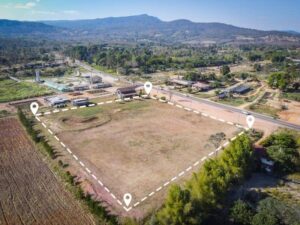 A rezoning request near a parcel you want to buy raises a fair concern about which land you are really looking at. A boundary survey gives you surveyed facts about where that parcel starts and stops. It works next to the city’s planning record, not in place of it.
A Rezoning Notice Can Change How You View a Nearby Parcel
A rezoning notice tells you someone asked the city to allow a different use on a parcel. It does not mean building will happen. In Tuscaloosa, the Planning and Zoning Commission publishes rezoning and subdivision cases. If a nearby parcel is in a case, your first job is to find that exact parcel.
When you shop for land, a rezoning notice on nearby property can shift how you see the area. Still, a request is just a request. The city reviews it, and nothing is built the day a case is filed.
Tuscaloosa’s Planning and Zoning Commission posts cases that cover rezoning and subdivision proposals. You can read which parcel each case involves. That detail carries more weight than a phrase like “the property next door.”
A general description can point you to the wrong piece of ground. Two lots can sit side by side and look alike from the street. Before you decide to buy, it helps to know where the parcel you care about begins and ends.
Start With the Parcel, Not Just the Zoning Case
Find the exact parcel in the rezoning case, not just the zoning change it asks for. Look for the legal description, the parcel ID, the acreage and the location. Tuscaloosa’s rezoning materials ask for these same details, so you can tie the case to a real piece of land.
A zoning case has two parts worth separating. One part is the change being asked for. The other part is the parcel itself, and buyers often focus on the first and skip the second.
The parcel details are what connect a case to real ground. Look at the property’s legal description, its parcel identification, its acreage and where it sits. Those items point to one specific property, not a general area.
Tuscaloosa’s rezoning materials ask the applicant for the same kind of detail. That includes the property address, subdivision, parcel ID, lot number, lot size, current zoning and the requested zoning change. When you read a case, you can pull those fields and see which parcel is in play.
Knowing what a case proposes is one thing. Knowing the physical parcel you might buy is another. Keep those two ideas apart, and the rest gets clearer.
What a Boundary Survey Can Add to Your Pre-Purchase Review
A boundary survey shows the surveyed location of a parcel’s boundaries. A licensed surveyor bases it on records research and fieldwork. When a nearby rezoning or subdivision case makes the link between parcels matter, that surveyed line gives you firmer footing than a map estimate.
A boundary survey answers a narrow question in this scene. It shows where the parcel’s boundaries sit, as measured on the ground. A surveyor reaches that through records research and field measurements, then sets the surveyed line.
That surveyed line matters when a nearby case puts two parcels next to each other in the spotlight. A rezoning or subdivision proposal can make the space between properties count more than it did before. If you plan to buy, you want the parcel’s edges based on survey work, not a guess from an online parcel map.
This is not a full rundown of what surveys can do. The point here stays simple. In a rezoning setting, the surveyed boundary shows what you are actually buying.
Compare the Surveyed Parcel With the Planning Record
Treat the planning case and the surveyed parcel as two separate checks. Read the city’s case materials to see which parcel is named. Then compare that with the surveyed property. A boundary survey does not predict whether a rezoning will pass or what gets built.
Here you run two checks and set them side by side. The first check is the planning record. The second is the surveyed parcel, and each tells you something the other cannot.
Tuscaloosa’s Planning and Zoning Commission puts out legal notices, agendas, maps of upcoming cases and application materials. From those, you can find the parcel a case names. Then confirm one plain thing, that the parcel in the case matches the property you think people mean.
One more point on Tuscaloosa. The city’s new zoning ordinance took effect January 1, 2025. Older listings or past discussion may use zoning terms that no longer fit, so check the current case materials and work from today’s record.
Keep the roles straight. A boundary survey sets boundary facts, and it does not decide a zoning case. The city’s planning and zoning process handles land use and what may be built. Mixing those two up leads to false comfort.
Ask These Questions Before You Make the Purchase Decision
Before you commit, run through a short question set. It keeps the parcel, the survey and the planning case lined up. Use it with your surveyor, a title professional or the right planning staff.
- Which exact parcel is in the rezoning request?
- Does the property’s legal description match the parcel you are looking at?
- Has the property been resurveyed lately?
- Is the survey recent enough for what you plan to do?
- Are nearby parcels part of companion subdivision or development cases?
- What should you go over with a surveyor, title professional or planning staff?
- Have you read the current planning case, not an old listing or past discussion?
Tuscaloosa’s current Planning and Zoning page shows why that last question matters. Some matters show up as companion cases tied together. Others get continued to a later date, pulled by the applicant or changed in some other way, so a case you read about months ago may not read the same today.
Going through these questions does not slow a purchase for no reason. It keeps your read on the land honest. You end up buying with a clear picture of the parcel and the case around it.
Frequently Asked Questions
1. Does a rezoning request mean the proposed development will definitely happen?
No. A request only starts a land-use review. The city still has to work through the case. A pending request is not proof that a project will get approved or built.
2. Why consider a boundary survey when buying land near a rezoning case?
It gives you surveyed boundaries for the parcel, measured on the ground. That pairs with the planning record, which shows the proposed change. Together they help you see both the land and the case with more certainty.
3. Can a boundary survey tell me whether a rezoning request will be approved?
No. A survey marks boundaries. It does not settle a zoning case. Those decisions run through the city’s planning and government process.